






Torsion and Extension Springs Explained: What a Local Garage Door Contractor in Saint Paul Replaces and Why
This guide explains torsion and extension springs and what a local garage door contractor in Saint Paul, MN, replaces and why. Springs do the heavy lifting on every door, so knowing how they work helps you spot trouble early.
What Garage Door Springs Do
A garage door is heavy, and the springs counterbalance that weight so a person or an opener can lift it. Without working springs, the opener strains and the door can become dangerous.
Every spring is rated in cycles, and one cycle is one full open and close. A rating is a useful guide, but real life depends on use, weather, and upkeep.
Types of Garage Door Springs
Most homes use one of two spring types.
Torsion Springs: Above the Door
Torsion springs mount above the door, parallel to the header, and they twist to create lifting force. They are the most common type on modern residential doors.
They tend to last longer, with ratings often cited between 10,000 and 15,000 cycles, and they give smooth, balanced movement. If one breaks, the pieces usually stay on the shaft, though the failure is still dangerous.
Extension Springs: Along the Tracks
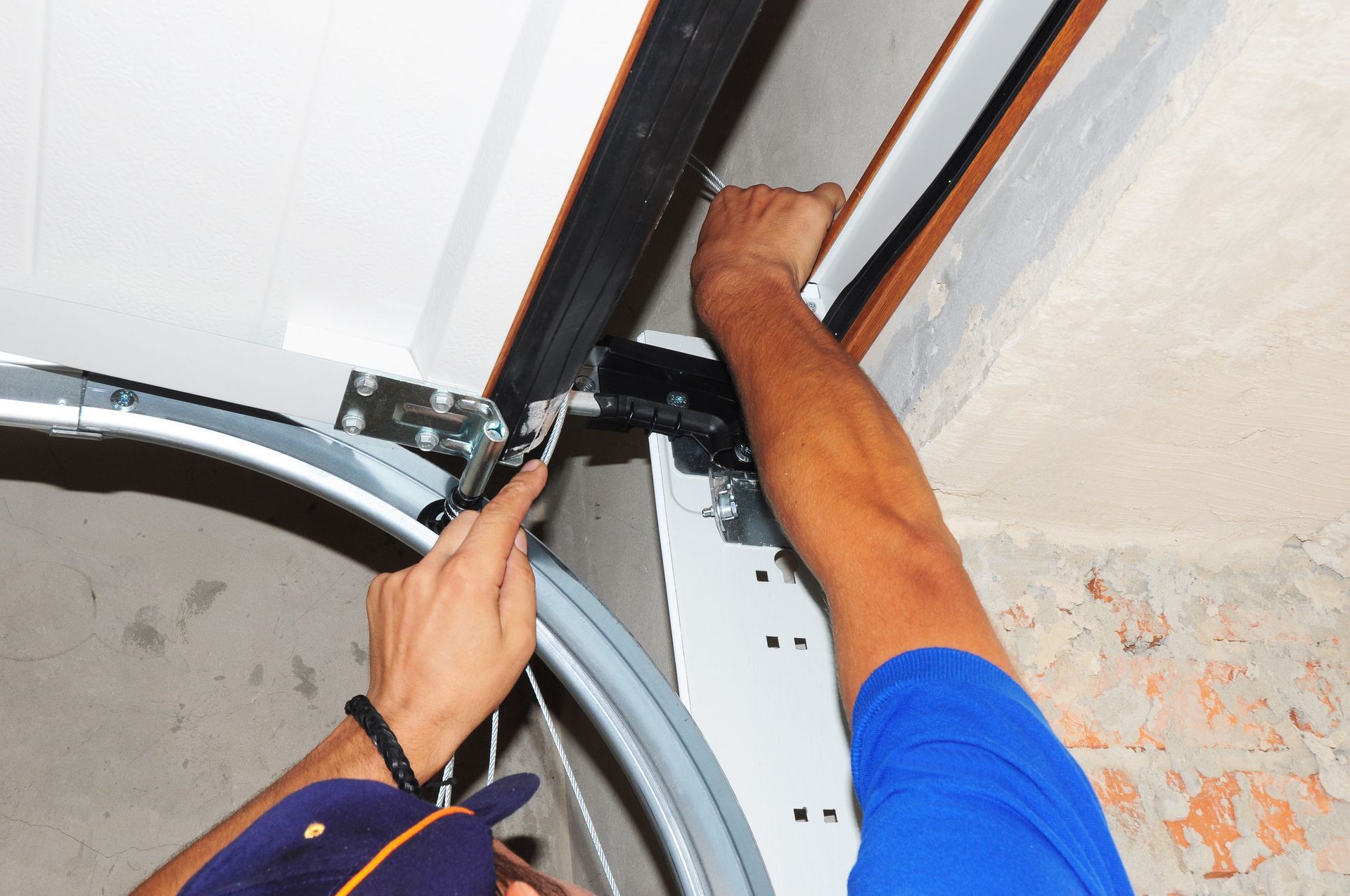
Extension springs run along the sides of the door, parallel to the horizontal tracks, and they stretch and contract as the door moves. They are common on older and lighter doors.
They typically wear out sooner, with ratings often cited between 5,000 and 10,000 cycles. A broken extension spring can whip across the garage, which is why safety cables are used with these springs.
Why Springs Fail in Saint Paul
Springs wear out for a few common reasons, and Saint Paul's sub-zero winters add extra stress:
- Fatigue after thousands of open-and-close cycles.
- Cold air that makes metal parts contract.
- Thick, old lubricant that lets the coils rub.
- Heavy daily use, which adds cycles faster.
A local garage door contractor sees this pattern each January. Springs that were already worn give out on the first cold morning, and a door that opened fine in October suddenly will not move.
Spring Sizing and Matching
Springs are not one-size-fits-all. A replacement has to match the door in three ways:
- The weight of the door.
- The height of the door.
- The type of track.
An undersized spring wears out early, while an oversized one can strain the opener. Matching the right spring to the door is a large part of the repair.
Some owners choose higher-cycle springs when the garage is the main entrance. A local garage door contractor can talk through the options during the visit and recommend what fits how the door is used.
Maintenance That Helps Springs Last
Simple care can extend the life of a spring. A few habits help:
- Lubricate moving parts every six to twelve months.
- Look for rust or gaps in the coils.
- Listen for new noises when the door runs.
How to Check the Door Balance
You can also check the balance yourself in three steps:
1. Disconnect the opener.
2. Lift the door halfway by hand.
3. Let go and watch what the door does.
A balanced door stays put, while one that drops or rises needs attention. Schedule a seasonal tune-up before winter so a weak spring is caught before the first deep freeze.
Signs a Spring Needs Attention
Watch for these warning signs:
- The door will not open, or stops halfway.
- One side rises or lowers more than the other.
- A loud bang from the garage, followed by a door that feels heavy.
- Visible gaps in the coil, rust, or a stretched or loose spring.
Stop using the door if you notice any of these, and call a professional.
Why Springs Are a Job for a Professional
Garage door springs hold a large amount of stored tension, and improper handling can cause serious injury. Replacing a spring is not a good do-it-yourself project.
A local garage door contractor brings the training and gear to do the job safely. That includes:
- The right tools for winding springs.
- Matched replacement springs.
- A check of the cables, rollers, and hinges.
- A balanced door and fresh lubricant on the moving parts.
Ask for a short note of what was replaced and keep it with your home records.
Common Questions About Garage Door Springs
How Long Do Garage Door Springs Last?
Many standard springs are rated for roughly 10,000 cycles. At several uses a day, that works out to about seven to ten years, and heavy use shortens it. Torsion springs usually outlast extension springs under the same use.
What Happens During a Spring Replacement Visit?
The visit usually follows these steps:
1. The technician inspects the door and explains what needs to be replaced.
2. The technician installs matched springs.
3. The technician runs a balance test.
4. The crew checks the cables and rollers.
5. The crew tests the door before leaving.
Should I Replace Both Springs at Once?
Often, yes. When one spring on a two-spring door breaks, the other is usually close to the same age, and replacing both keeps the door balanced.
Get Springs Replaced by a Local Team
Northern Door Co., based in White Bear Lake, MN, stocks springs, cables, and parts on its trucks. The team works as a local garage door contractor serving Saint Paul. You can read what customers say about Northern Door Co. on Google. Call (651) 490-1599 or contact us to schedule service. You can also see the page on garage door repair in Saint Paul.